SB 881 (McNerney) Supporting Farmers, Feeding Communities
OVERVIEW
SB 881 extends two proven programs that reduce food waste, support farmers, and strengthen California’s food banks. The bill extends the Farm to Food Bank Tax Credit and the Emergency Food for Families Voluntary Tax Contribution Fund to ensure these critical tools remain available during a time of growing food insecurity.
BACKGROUND
California produces more food than any other state in the nation, yet millions of Californians struggle with food insecurity while edible food is wasted each year. Redirecting surplus food to families in need is both a hunger relief strategy and a climate solution, as keeping food out of landfills reduces methane emissions.
The Farm to Food Bank Tax Credit has evolved over more than a decade:
AB 152 (Fuentes, 2011) created the Donated Fresh Fruit or Vegetables Credit, a 10 percent credit for eligible growers donating fresh fruits and vegetables. The credit operated from 2012–2016 and also created the State Emergency Food Assistance Program (SEFAP).
SB 837 (Budget, 2016) established a new credit equal to 15 percent of the weighted average wholesale price of donated fresh fruits and vegetables, operative for tax years 2017–2021.
AB 614 (Eggman, 2019), co-sponsored by Californians Against Waste and the California Association of Food Banks, expanded eligible donation items to include proteins, dairy, shelf-stable goods, and other nutritious foods, and broadened eligible donors beyond growers.
AB 150 (Budget, 2021) further extended the credit through tax year 2027.
The Farm to Food Bank Tax Credit has seen steady participation over time, with notable increases during the COVID-19 pandemic. (Source)
Add your organizational support to our sign on letter here.
Position: Co-Sponsored by Californians Against Waste & California Association of Food Banks
Contact: Nick Lapis
Status: Governor’s Desk
Current language, analysis, and votes: SB 881
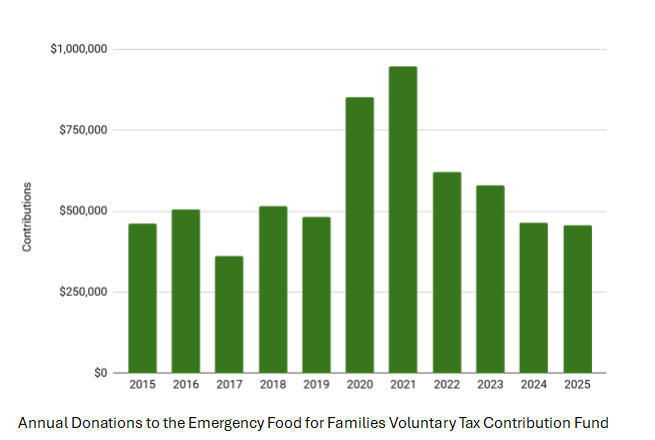
The Emergency Food for Families Voluntary Tax Contribution Fund was established in 1998 to support food banks through voluntary tax check-off donations. The program uses an existing statewide distribution infrastructure administered by the California Department of Social Services to efficiently allocate food and funds across all 58 counties. In 2017, SB 61 (Hertzberg) renamed and extended the fund on state income tax returns through 2025.
Californians have consistently stepped up to support hunger relief through voluntary tax check-off donations. Both programs saw increased participation during the COVID-19 pandemic, demonstrating their importance during times of crisis.
Program Participation Trends
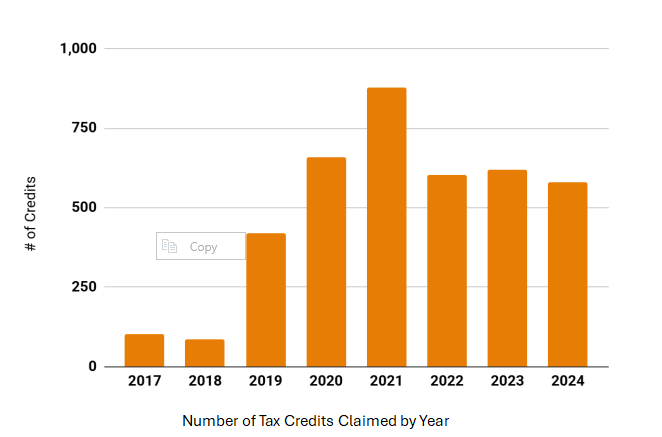
The tax credit has translated into tens of millions of dollars in donated California-grown and produced food over the past decade. (Source)
Today, food banks face a dual challenge: federal reductions in food assistance and emergency food funding, alongside rising need as more Californians struggle with the cost of living. In this moment, maintaining proven, efficient programs that reduce waste and increase food access is essential.
The Farm to Food Bank Tax Credit and Emergency Food for Families Voluntary Tax Contribution Fund are critical to advancing both waste reduction and food recovery goals.
WHAT DOES SB 881 DO?
SB 881 extends two programs:
Extends the Farm to Food Bank Tax Credit The bill extends the existing 15 percent tax credit for qualified donations of agricultural products through tax year 2032. The credit helps farmers cover harvesting, packing, and processing costs associated with donating food that might otherwise go to waste. Eligible items include fruits, vegetables, nuts, meat, poultry, eggs, dairy, shelf-stable goods, and other nutritious foods, and eligible donors include growers and producers involved in cultivating, raising, harvesting, packing, or processing qualified food items (excluding retailers).
Extends the Emergency Food for Families Voluntary Tax Contribution Fund The bill extends the voluntary tax check-off fund through 2037. This program allows Californians to contribute a portion of their tax refund to support food banks statewide. Since its creation, the fund has raised millions of dollars to support hunger relief efforts across California.
Together, these programs reduce food waste, lower greenhouse gas emissions from landfills, support farmers, and strengthen the charitable food network at a time of increasing demand.
FREQUENTLY ASKED QUESTIONS
-
Food banks are facing reduced federal food assistance and funding at the same time that more Californians are relying on them. Extending these programs ensures that state-level tools remain available to meet rising demand.
-
By helping farmers offset the costs of harvesting and donating surplus food, the credit makes it financially viable to redirect edible food to food banks instead of leaving it in fields or sending it to disposal. This reduces methane emissions from landfills and supports California’s climate goals.
-
Farmers receive support for donation-related costs, food banks gain access to high-quality California-grown food, and families in need receive nutritious food. Additionally, Californians benefit from a cost-effective strategy that addresses both food insecurity and climate impacts.
-
No. SB 881 extends two long-standing, successful programs that have been repeatedly supported and expanded by the Legislature over the past decade.