2021-2022 CALIFORNIA WASTE & RECYCLING LEGISLATION
This session, Californians Against Waste was proud to fight plastic pollution & promote waste reduction by sponsoring & supporting more bills than ever before.
BILLS SPONSORED BY
CALIFORNIANS AGAINST WASTE
AB 802 (Bloom) Microfiber Pollution
Status: Dead. Not heard by Assembly Environmental Safety and Toxic Materials Committee.
Helps address microplastic pollution in California drinking water and watersheds that comes from our clothing.
AB 881 (L. Gonzalez) Plastic Waste Exports
Status: Signed by the Governor
Closes an existing loophole in California law that allows mixed plastic exports to be counted as recycling regardless of their ultimate destination, which is often overseas landfills, incinerators or waterways.
AB 962 (Kamlager) Refillable Glass Beverage Containers Status: Signed by the Governor
Allows returnable glass (“refillable”) bottles to flow through the state’s Beverage Container Recycling Program.
AB 1454 (Bloom) Bottle Bill Modernization
Status: Dead. Not heard by Senate Environmental Quality Committee.
Helps keep recycling centers open and provides much-needed support for new centers to open in areas where there are not enough centers to serve consumers, including rural areas.
AB 1857 (C. Garcia) Waste Incineration Reform
Status: Signed by the Governor
Reclassifies incineration as disposal, not recycling, and directs investments in zero-waste strategies for affected communities.
AB 1953 (Maienschien) Water Refill Stations
Status: Held
Requires certain public areas to install and maintain accessible water bottle refill stations.
AB 1985 (R. Rivas) Organic Waste
Status: Signed by the Governor
Assists local governments in achieving organic waste targets by facilitating connections with local farmers and community members in need of organic waste materials.
SB 289 (Newman) Battery Recycling
Status: Dead. Held by the Senate Appropriations Committee.
Requires battery collection bins at retail outlets where batteries are sold or supplied.
SB 343 (Allen) Truth in Labelling
Status: Signed by the Governor
Prohibits the use of the chasing-arrows symbol or any other suggestion that a material is recyclable, unless the material is actually recyclable in most California communities and is routinely sold to manufacturers to make new products.
SB 1046 (Eggman & Gonzalez) Ban Non-Compostable Plastic Bags
Status: Signed by the Governor
Prohibits the distribution of plastic pre-checkout produce bags unless they are reusable, recyclable or compostable.
SB 1215 / AB 2440 (Newman & Irwin) Battery EPR
Status: Signed by the Governor
Streamlines recycling for rechargeable batteries and battery-embedded products like mobile phones, earbuds, and smartwatches, boosting recycling rates by providing easier disposal options due to current lack of efficient systems.
OTHER BILLS SUPPORTED BY
CALIFORNIANS AGAINST WASTE
AB 478 (Ting) Thermoform Minimum Content
Status: Dead. Held by Senate Appropriations Committee.
Would require producers of plastic clamshell packaging to include post-consumer recycled content.
AB 661 (Bennett) Recycled Product Standards for State Agencies
Status: Signed by the Governor
Addresses the state’s recycling goals by requiring state agencies to observe updated recycled product standards when contracting with vendors.
AB 1086 (Aguiar-Curry) Organic Waste Management
Status: Dead. Held by Senate Appropriations Committee.
Requires the Natural Resources Agency to prepare and submit a report to the Legislature that provides an implementation strategy to achieve the state’s organic waste, climate change and air quality mandates, goals, and targets.
AB 1201 (Ting) Compostable Product Standards
Status: Signed by the Governor
Will ensure that products labeled “compostable” are actually compostable and ensure harmful chemicals stay out of California’s compost stream.
AB 1276 (Carrillo) Unnecessary Food Serviceware
Status: Signed by the Governor
Expands plastic straws upon request law to include other single-use food accessories, other food facilities, and third-party delivery platforms - including food that is taken away, delivered, or served on-site.
AB 1371 (Friedman) Plastic Film in E-Commerce
Status: Died in Assembly Third Reading
Phases out the use of plastic "films" -- including mailers, void fill and polystyrene peanuts — in e-commerce packaging. Critical since there are already so many better non-plastic options.
AB 1724 (Stone) Microfiber Filtration
Status: Held
Requires all new washing machines sold in California to be equipped with microfiber filtration by 2024. The bill will also require the state to retrofit all state-owned washing machines with a microfiber filter.
AB 1894 (L. Rivas & Petrie-Norris) Smoking Waste Pollution Prevention Act
Status: Signed by the Governor
Transitions the sale of single-use cigarette and cigar, and all-in-one disposable vapes to rechargeable and reusable smoking products.
AB 2026 (Friedman) Shift to Sustainable E-Commerce Packaging
Status: Held
Requires companies to shift to e-commerce packaging that is reusable or recyclable/compostable and accepted in curbside bins and away from plastic mailing envelopes, bubble wrap, air pillows, and expanded polystyrene.
AB 2208 (Kalra) Reduce Waste From Toxic Mercury Lamps
Status: Signed by the Governor
Ends the sale of mercury-containing fluorescent lamps (lightbulbs). Mercury is difficult to dispose of and becomes toxic and hazardous to humans and wildlife.
AB 2638 (Bloom) Water Refill Stations in Schools
Status: Signed by the governor
Requires new construction or modernization projects submitted to the Division of State Architect (DSA) by a school district or governing body of a charter school includes one or more water bottle filling stations.
AB 2779 (Irwin) Bottle Bill for Wine and Distilled Spirits
Status Held
Moderately expands the California Beverage Container Recycling Program to include all alcoholic beverages packaged in aluminum cans.
AB 2784 (Ting) Increase Use of Recycled Plastic Content
Status: Vetoed by the Governor
Establishes a recycled content standard for plastic thermoform containers, fostering a circular economy for their production, collection, recycling, and reprocessing for post-consumer thermoform containers.
SB 38 (Wieckowski) Beverage Containers
Status: Signed by the Governor
This bill exempts beverage manufacturers that sell fewer than 2 million beverage containers in a calendar year from the Bottle Bill recycled content requirements minimum. The bill also makes some technical changes on payments methods and contamination issues.
SB 54 (Allen) - Plastic Pollution Producer Responsibility Act
Status: Signed by the Governor
Reduces pollution from single-use packaging and food service ware waste. As currently written, this is "placeholder" language that requires producers to source-reduce disposables, sets ambitious recycling and composting requirements, and requires all disposable packaging and food serviceware to be truly recyclable/compostable by 2032.
SB 240 (Eggman) Food Donation Tax Credit
Status: Dead. Not taken up for a vote in the Senate.
Would extend the sunset of the Healthy Food Donation Bank tax credit to January 1, 2027.
SB 1013 (Atkins) Adding Wine and Distilled Spirits to the CA Bottle Bill
Status: Signed by the Governor
Expands California's Bottle Bill to include wine and spirits containers, boosting recycling volumes, reducing litter, and protecting California’s environment and natural resources.
SB 1256 (Wieckowski) Stop Single-Use Propane Canister Waste
Status: Vetoed by the Governor
Ends the sale of disposable 1 lb propane canisters (typically used with camping stoves) since refillable options are readily available.
AB 802 (Bloom) Microfiber Pollution
OVERVIEW
AB 802 tasks the State Water Board to identify the best microfiber filtration technology for industrial laundry facilities and requires these facilities to implement the technology.
THE ISSUE
When plastic litter breaks down in our ecosystem, it turns into tiny pieces called microplastics. Similarly, when clothing made of synthetic materials (including common fabrics such as polyester, acrylic, and nylon) are washed, they also release tiny pieces of plastic called microfibers. Microfibers persist in the environment, and they have been found in remote marine habitats, drinking water, and in food.
Position: Sponsored by Californians Against Waste
Contact: Nick Lapis
BILL SUMMARY
This bill would require the State Water Resource Board to test microfiber filtration systems, adopt a standard methodology for evaluating the filtration systems, and publish the results. It would also phase in washing machine filtration system requirements for public entities that use a laundry system, like universities and prisons, or those that contract with the State for these services, then expand to all businesses.
Status: Dead. Not heard by Assembly Environmental Safety and Toxic Materials Committee.
Current language, analysis, and votes: AB 802
AB 881 (L. Gonzalez) Plastic Waste Exports
OVERVIEW
AB 881 closes an existing loophole in California law that allows mixed plastic exports to be counted as recycling regardless of their ultimate destination, which is often overseas landfills, incinerators or waterways. This bill ensures that only materials that are truly being recycled get counted towards state and local recycling goals.
THE ISSUE
California has established a policy goal to divert 75% of the state’s generated solid waste through source reduction, recycling, and composting by 2020 (AB 341, Chesbro). Local jurisdictions contract with solid waste service providers and material recovery facilities (MRFs) that collect, sort, and bale material from the community to sell to end-use buyers who use it to create new products. Communities achieve disposal and diversion rates when waste isn’t littered, dumped, or sent to landfills.
In the US, California is a top exporter of plastic waste to other countries around the world. Manufacturers purchase this plastic waste and pick out the valuable pieces to use for raw materials to make new products; they do not use all of the waste because it may be the wrong material for their needs and/or it costs too much to process to make it worthwhile for them to use. This unused exported plastic waste often gets dumped illegally, landfilled, or incinerated -- often in vulnerable, impoverished communities -- and our California plastic waste becomes their local pollution problem.
Unfortunately, when California exports worthless mixed plastic waste to other countries, CalRecycle and local jurisdictions do not count the material as being “disposed;” even though that is exactly what happens to much of that waste. For purposes of assessing how the state is meeting its 75% solid waste “diversion” goal, CalRecycle assumes that exported waste is recycled regardless of what actually happens to it -- even if that waste is simply landfilled, dumped, or incinerated in another country.
As plastic is mismanaged, it further pollutes the environment and health of people nearby. Fumes from incineration can cause respiratory problems, while dumping or open landfilling can lead to pollution in both marine and land based habitats. As plastic then breaks down into microplastics, they concentrate toxic chemicals from the waste that can contaminate food and drinking water sources.
It’s time to stop counting exported plastic waste in an inaccurate, misleading way that makes all exports wrongly appear to be recycled. This measure takes steps to address California’s plastic pollution problem instead of exporting it around the world.
Position: Sponsored by Californians Against Waste
Contact: Nick Lapis
BILL SUMMARY
AB 881 would reclassify the export of mixed plastic waste as disposal, while allowing truly recyclable plastic to continue to be counted towards California recycling goals. To be counted as diversion through recycling, rather than disposal, AB 881 would require the export to:
Be a readily recyclable plastic type or mixture. The Basel Convention identifies polyethylene (PE), polypropylene (PP) and polyethylene terephthalate (PET) as allowable exports without stricter regulation due to their easy recyclability, provided they are destined for separate recycling of each material. AB 881 would allow these exports to be counted as diversion through recycling.
Not be prohibited by an applicable law in the country of destination. Basel Convention signatory countries may establish their own accepted level of contamination and may require prior agreements for the import of plastic scrap.
Status: Signed by the Governor
Current language, analysis, and votes: AB 881
AB 962 (Kamlager) Returnable Beverage Bottles
OVERVIEW
AB 962 will pave the way for reusable beverage bottle systems in California by allowing reusable (“returnable”) glass bottles to flow through the state’s Beverage Container Recycling Program.
THE ISSUE
Californians purchase an average of 2-3 packaged drinks every day, 99.9% of which are in single-use glass, plastic, metal and paperboard beverage containers. The largest category of these are beverages covered by California’s Beverage Container Recycling Program (CRV/Bottle Bill), which accounts for just over 25 billion single-use containers annually. Though 70%-80% of these containers are returned and successfully recycled into (mostly) new containers, nearly 450,000 tons of single-use beverage containers are still disposed of annually.
It was not that long ago when reusable glass was the packaging of choice for milk, beer and soft drinks. As recently as 60 years ago, nearly half of all “off-premise” beer and soft drink sales were in reusable glass. From 1950 to 1973, the number of soft drink bottling plants in the United States decreased by 60 percent while sales in the industry increased by 276 percent. As smaller bottlers got bought out by larger bottlers, the geographic range of distribution increased and single-use bottles became more highly used. By the time the California Bottle Bill was implemented in 1988, soft drinks were no longer sold in reusable glass, and only about 20% of beer sales were in reusables and were limited to bar and restaurant sales. For example, of the nearly 2 billion glass wine and distilled spirits bottles sold in California annually - roughly 1.2 million tons of glass - at best only about 25% of this glass is collected for recycling and available for manufacture into new bottles.
More difficult to quantify, but more significant environmentally are the hundreds of thousands of tons of non-CRV glass, aluminum, paperboard, plastic and plastic-coated paper single-use beverage containers consumed and disposed of annually. These include wine and distilled spirits, milk, juice, coffee and soft drinks. While many of these container types are technically able to be recycled, the lack of recycling markets, or producer responsibility for market development and covering the cost of recycling, has resulted in little to no recycling of these materials
Moreover, the environmental benefits of reusable glass bottles compared to their single-use counterparts is significant. According to the Container Recycling Institute (CRI), reusable glass bottles use approximately 93% less energy and 47-82% less water, depending on the number of reuses. And according to Reloop, as the number of reuse cycles increases, so does the reduction in emissions when compared to single-use glass bottles (~85% less emissions,) single-use PET (~70% less emissions,) and aluminum cans (~57% less emissions.) Current models demonstrate reusable bottles go through 15-20 refills on average.
Reusable bottles also provide enormous economic potential for manufacturers. The upfront purchase cost of a reusable bottle is offset as the bottle is returned for refill multiple times, ultimately resulting in cost savings to beverage manufacturers. And for consumers, beverages are generally less expensive in a reusable container than in the same single-use container.
An increase in reusable bottle operations also puts California on the path towards a green economy by providing clean green jobs, including local and regional production line workers, managers, and bottle collectors. Reuse creates as much as 30 times more jobs than landfills.
Position: Co-sponsored by Californians Against Waste & Clean Seas Lobbying Coalition
Contact: Tony Hackett
BILL SUMMARY
AB 962 will lay the foundation for a more sustainable and economically viable business model by creating an even playing field for the use of reusable glass beverage bottles by beverage manufacturers. It does so by authorizing CalRecycle to allow reusable bottles to flow through the state’s bottle bill program and ensuring that recycling centers and processors, including bottle washers, that handle reusable glass beverage containers receive the same payments they would receive for recycling single-use glass bottles. In the future, experience gained through AB 962 implementation may also pave the way for reusables made from materials beyond glass.
Status: Signed by the Governor
Current language, analysis, and votes: AB 962
AB 1454 (Bloom) Bottle Bill Modernization
OVERVIEW
AB 1454 helps keep recycling centers open and provides much-needed support for new centers to open in areas where there aren’t enough centers to serve consumers, including rural areas.
THE ISSUE
Container recycling rates are dropping in some regions: Statewide beverage container recycling rates have fallen below 70% for the first time in 13 years, meaning that too many bottles and cans are ending up in landfills or as litter. Data from CalRecycle demonstrates that the most likely reason is because in communities and regions where recycling rates are lowest, there aren’t enough locations or opportunities for people to return these containers for recycling.

Outdated laws have led to recycling center closures: More than 1000 community-based recycling centers have closed since 2015 because of outdated statutory requirements for calculating compensation. Record low global prices for scrap materials have compounded the problem.
For 30 years, the Bottle Bill program has relied on a rigid “Convenience Zone” definition to determine where new recycling centers are located and which centers can receive supplemental recycling incentives, ( also known as “Handling Fees”). But it is clear that this definition does not currently serve the public sufficiently: CalRecycle’s 2018 Handling Fee Report and 2020 AB 54 Report to the Legislature indicate that ‘unserved zones’ and ‘unserved/underserved communities’ do not always correlate.
CalRecycle clearly needs greater flexibility and authority to define and establish Convenience Zones and provide resources to regions that need centers. Unserved and underserved areas of the state could be covered by as few as 400-600 thoughtfully located community-based recycling centers.
With key changes to outdated and unnecessarily rigid statutory requirements for the creating more recycling opportunities, CalRecycle will be able to certify and support innovative and convenient recycling opportunities such as mobile recycling, Bottle Drop, and Reverse Vending Machines, especially in the regions that need these opportunities the most.
Position: Sponsored by Californians Against Waste
Contact: Mark Murray
BILL SUMMARY
AB 1454 makes the Bottle Bill program more efficient and effective through the following modifications:
Provides targeted increase in payments to recycling centers to better reflect the actual average cost of diverse (small, medium & large) community-based recycling centers based on CalRecycle’s 2020 cost survey.
Reestablish Plastic Quality Incentive Payments to further enable the state’s achieving its minimum recycled content requirements on plastic beverage containers.
Expands Convenience Zone recycler incentive (Handling Fee) eligibility beyond Supermarket parking lots to any recycler willing to open in a currently unserved zone.
Provides start-up financing (up to $25,000 per location) to any certified entity that opens and operates a recycling center in one of the 400-600 unserved/underserved areas. Authorizes loan forgiveness after 18 months of successful operation.
Right-sizes Convenience Zones to meet community needs based on CalRecycle recommendations.
Status: Dead. Not heard by Senate Environmental Quality Committee.
Current language, analysis, and votes: AB 1454
AB 1857 (C. Garcia) Incineration is Disposal
OVERVIEW
AB 1857 will remove the diversion credit for municipal solid waste incinerators and redefine incineration as disposal. Burning trash is not recycling or reducing our waste, and this bill stops that false narrative that has been in California Law since the 1980’s.
THE ISSUE
The Integrated Waste Management Act (“Act”) (AB 939 in 1989) mandates that jurisdictions must divert at least 50% of their waste away from landfills and into source reduction, recycling, reuse, and composting activities. However, the Act permits jurisdictions to count up to 10% of the waste (“Diversion Credit”) that they send to municipal solid waste incinerators towards their obligation to divert at least 50% of their waste away from landfills.

The Southeast Resource Recovery Facility (SERRF) and Covanta Stanislaus are the last two municipal solid waste incinerators still operating in California. They are both over 30 years old, making them incredibly dirty and expensive to maintain. In 2018 the Long Beach City Council approved $8.7 million in upgrades to keep SERRF running through 2024.
Despite the public health and environmental harm from these incinerators, the State of California incentivizes jurisdictions to send their waste to SERRF and Covanta Stanislaus to claim Diversion Credit. SERRF and Covanta Stanislaus pollute the environment and harm public health by converting waste into harmful air emissions and toxic ash. Further, the incinerators release large amounts of greenhouse gasses. While SERRF and Covanta Stanislaus claim to be “waste-to-energy” facilities, they produce very little energy and emit more carbon dioxide per unit of energy than coal-fired power plants.
Position: Sponsored by Californians Against Waste
Contact: Nick Lapis
BILL SUMMARY
AB 1857 will close a loophole in state law that allow incineration to be count as “diversion“ for purposes of local government recycling mandates. Under the law, material sent to incineration will be classified as disposal.
Status: Signed by the Governor
Current language, analysis, and votes: AB 1857
AB 1953 (Maienschein) Water Refill Stations
OVERVIEW
Concerned by plastic pollution and climate change impacts, consumers are making the switch to reusable alternatives - about 60 percent of U.S. adults opted for a reusable water bottle in 2020. In public areas, consumers most often only have the option to hydrate using existing public drinking water facilities, such as public water fountains.
AB 1953 will improve water accessibility and support consumer choices by requiring various public areas to install and maintain accessible water bottle refill stations in addition to existing water fountains. Ensuring water refill stations are publicly available not only improves accessibility to drinking water, but also creates lasting infrastructural support for consumers opting for reuse.
THE PROBLEM
According to the California Office of Environmental Health Hazard Assessment, nearly one million Californians lack access to clean water. Additionally, climate change is exacerbating problems with water quality, availability and affordability. Public Policy Institute of California (PPIC) reports that during the 2012‒16 drought, at least 2,600 well-dependent households in California faced drinking water shortages, while more than 150 water systems applied for emergency state funding to address supply and quality problems. Additionally, more than 250 water systems serving around 900,000 people in California were out of compliance with drinking water standards in 2020. California faces many challenges in providing clean, safe and affordable drinking water infrastructure to all of its citizens, including homeless, low-income, and minority communities, which can also contribute to plastic water bottle consumption. Public drinking water infrastructure needs improvement to meet consumer needs for clean drinking water, with the added benefit of provided sustainably, and at little to no cost.
Every hour, consumers throw away 2.5 million plastic bottles and less than 30 percent of PET plastic bottles are recycled in the state. Around 60 million plastic bottles end up in landfills every single day, and Americans alone send more than 38 billion water bottles to landfills every year, the equivalent of 912 million gallons of oil. By 2022, the consumption of plastic bottles is set to hit half a trillion every year. This far outweighs recycling efforts and will continue to massively jeopardize our environment. Investing in reuse infrastructure to support reuse systems for reusable water bottles and other refillable containers can prevent pollution and waste. Water bottle refill stations support consumer demand for access to free, potable water when in public spaces
Position: Sponsored by Californians Against Waste
Contact: Nick Lapis
BILL SUMMARY
AB 1953 will require certain public areas to install and maintain accessible water bottle refill stations. It will also require inaccessible public water refill stations to be upgraded to be accessible by January 1, 2025. AB 1953 addresses the issues of water access and waste reduction through the simple solution of improving access to refill stations.
Status: Held
Current language, analysis, and votes: AB 1953
AB 1985 Organic Waste (R. Rivas)
OVERVIEW
AB 1985 requires CalRecycle to compile and maintain a list of persons or entities that produce and have organic waste product(s) available, as well as require that the list be updated at least every six months.
THE ISSUE
In 2016, California set organic waste diversion goals of 50% by 2020 and 75% by 2025 in order to reduce methane and short-lived climate pollutants emissions. This has led to local governments adopting practices like composting to reduce the amount of organic waste going into landfills. Due to a historically limited amount of organic waste products available, local governments have struggled to find a market for their organic waste products. AB 1985 will help local governments in reaching organic waste goals by providing a way to connect with local farmers and community members in need of organic waste products.
An estimated 35 million tons of waste are disposed of in California's landfills annually. Over half of the materials landfilled are organics subject to SB 1383 requirements. SB 1383 required the ARB to approve and implement the comprehensive short-lived climate pollutant strategy to achieve, from 2013 levels, a 40% reduction in methane, a 40% reduction in hydrofluorocarbon gases, and a 50% reduction in anthropogenic black carbon, by 2030. In order to accomplish these goals, the bill specified that the methane emission reduction goals include targets to reduce the landfill disposal of organic waste 50% by 2020 and 75% by 2025 from the 2014 level.
In order to achieve these goals, California’s waste management infrastructure is going to have to recycle much higher quantities of organic materials, involving significant investments in additional processing infrastructure. Like all recycling, organic waste recycling can only succeed if there is a market for the recycled materials.
Assemblymember Rivas
Position: Sponsored by Californians Against Waste
Contact: Nick Lapis
Status: Signed by the Governor
Current language, analysis, and votes: AB 1985
SB 289 (Newman) Battery Recycling
OVERVIEW
SB 289 makes it easier for the public to recycle household batteries safely by requiring battery collection bins at retail outlets where batteries are sold or supplied.
THE ISSUE
Because of the hazardous metals and corrosive materials that batteries contain, California classifies batteries as hazardous waste and bans them from solid waste landfills where regular household trash goes. When improperly discarded into household or non-hazardous waste streams, lithium-ion (Li-ion) batteries in particular pose serious fire, health and safety hazards.
Unfortunately, because of a combination of increased consumption and a lack of convenient disposal options, more of these toxic batteries are entering the waste stream than ever before. Among other negative consequences, this has resulted in an alarming number of material recovery facilities, waste collection trucks, and landfills experiencing fires caused by improperly disposed of Li-ion batteries. These fires endanger the lives of workers and pollute the atmosphere and surrounding areas, while causing expensive damage to city and county waste collection vehicles, equipment and facilities.
Household batteries should not go into regular household or business trash cans, but consumers rarely have access to safe, easy, convenient places where they can properly dispose of these batteries. As a result, many consumers continue to dispose of batteries into regular trash cans, and the batteries continue to end up in landfills, where they cause problems for all of us.
Position: Sponsored by Californians Against Waste
Contact: Nick Lapis
BILL SUMMARY
SB 289 would create a collection and recycling program to more efficiently and effectively collect used batteries and ensure they don’t continue to contaminate our waste stream. Key aspects include:
Requiring free and easily accessible collection bins at select retail locations across the state by June 30, 2025.
Accepting loose and product-embedded batteries for all common household battery types, including Li-ion, alkaline, nickel-cadmium and nickel metal hydride batteries to avoid consumer confusion.
Requiring the producers of batteries and product-embedded batteries sold in the state to develop, finance, and implement this program in collaboration with CalRecycle to recover and recycle their products
Status: Dead. Held by Senate Appropriations Committee.
Current language, analysis, and votes: SB 289
SB 343 (Allen)
OVERVIEW
SB 343 provides “truth in labeling” to familiar recycling symbols on many plastic and packaging products. The measure prohibits the use of the chasing-arrows symbol on products that are not truly recyclable.
THE ISSUE

Before 2017, the United States sent 4,000 shipping containers full of waste to China each day, including two-thirds of California’s potentially recyclable materials. Exporting this material allowed cities and counties to keep it out of local landfills. It also inaccurately inflated state recycling rates, as recyclers in China and other countries picked out valuable materials and dumped or incinerated the rest. Since 2018, China and other countries have refused to accept all but the most valuable material, which has caused markets for plastic packaging that was previously considered “recyclable” to collapse.
This change has severely strained California’s local waste collection systems. Without a willing buyer for most of the plastic material being produced, the costs associated with sorting and landfilling the waste falls to local jurisdictions and their ratepayers. Recent waste management rate increases in Sacramento and elsewhere have been attributed, at least in part, to this problem. A 2018 study by CalRecycle found that plastic bags, films, and wraps – despite being only 12% of the waste stream – were “the largest type of contamination in curbside recycling bins.” This flexible plastic material with limited market value interferes with recycling facility machinery and, as a contaminant, lowers the value of recyclable paper and cardboard.
The strain on local recycling and waste systems is compounded as most consumers don’t know exactly what is and isn’t recyclable. The plastic resin identification coding (RIC) system, which classifies plastic types by numbers one through seven displayed within the chasing-arrows symbol, further confuses consumers. The RIC system helps waste facilities to properly sort plastics, but most consumers simply see the chasing arrows and assume that a product can be recycled -- even when it can’t be recycled, can only be recycled rarely, or does not have a market.
The Statewide Commission on Recycling Markets and Curbside Recycling recently reported, “Since consumers equate the ‘recycle’ word and symbol with what is accepted in curbside recycling bins, the ‘recycle’ word and symbol must be reserved for materials which are accepted in curbside bins and do not cause contamination.”
Position: Sponsored by Californians Against Waste & National Stewardship Action Council
Contact: Nick Lapis
BILL SUMMARY
SB 343 will end consumer confusion about which material is suitable for the blue recycling bin. It helps reduce contamination of recyclable materials, lowers waste volume, and improves real recycling rates.
The measure expands the existing “Truth in Environmental Advertising'' law that prohibits the use of the word “recyclable” on unrecyclable products. Specifically, the measure prohibits the use of the chasing-arrows symbol or any other suggestion that a material is recyclable, unless the material is actually recyclable in most California communities and is routinely sold to manufacturers to make new products. Through regulations, CalRecycle will determine which materials are truly recyclable and will publish on its website a list of acceptable materials that may continue to have the chasing arrows symbol .
SB 343 includes a process for producers of materials that do not yet meet the criteria to submit a plan to CalRecycle that demonstrates a commitment to increasing the collection, sorting, and recycling of their materials. If CalRecycle approves the plan, the producer may continue to encourage consumers to put their material in the blue bins.
Status: Signed by the Governor
Current language, analysis, and votes: SB 343
SB 1046 (Eggman & Gonzalez) Plastic Produce Bags
OVERVIEW
SB 1046 will increase consumer participation in organic waste programs by requiring grocery stores to distribute only paper or compostable pre-checkout bags.
WHY INCREASE ACCESS TO COMPOSTABLE BAGS?
Californians need a cost-efficient way to participate in curbside organic waste programs in order to maintain a compost stream free from plastic pollution.
Since 2022, SB 1383 (Lara, Chapter 395, Statutes of 2016) has required all California jurisdictions to provide organic waste collection services to all of their residents. Approximately 540 jurisdictions across California are educating and encouraging residents to participate in organic waste collection programs by separating food waste into their green bins. Organic waste collection programs can opt to send their organic waste to composting facilities that make soil amendments.
Frequently cited barriers to participating in a curbside organic waste collection program include odor, pest concerns, and “the high cost of buying separate compostable caddy liners”.
Furthermore, several studies have shown that contamination in compost waste streams decreases when consumers have convenient access to compostable bags. In a 2018 food waste collection trial in New York City, compostable bags were found to be the most effective tool for reducing compost stream contamination. This same trial also found that consumers were able to more successfully collect and separate organic waste due to the convenience of having a compostable bag readily available.
By providing paper or compostable pre-checkout bags, SB 1046 (Eggman & Gonzalez, Chapter 991, Statutes of 2022) will provide all Californians a cost-efficient way to participate in their curbside organic waste programs and reduce the amount of organic waste rotting in landfills.
THE ISSUE OF PLASTIC CONTAMINATION IN ORGANICS RECYCLING
Under SB 1383, organic waste collection programs can opt to send their organic waste to composting facilities that make soil amendments. In California, many of the plastic produce bags we use for our fresh fruits and vegetables while shopping in stores end up in compost waste streams and thereby contaminates municipal compost facilities. This type of contamination not only increases microplastics in compost, but also leads to increased handling costs which in turn leads to higher rates for consumers. As local governments begin implementing the composting requirements set forth in 2016’s SB 1383 (Lara), it is critical that we work to ensure that our waste streams are as clean and uncontaminated as possible.
SB 1046 will reduce plastic contamination in compost waste stream by providing consumers a recycled paper bag or compostable plastic bag to line their food scrap bins.
Position: Sponsored by Californians Against Waste
Contact: Nick Lapis
A press release from the Office of Senator Susan Eggman. Read the Mercury News article mentioned in the press release here.
Status: Signed by the Governor
Current language, analysis, and votes: SB 1046
WHAT DOES SB 1046 DO?

SB 1046 prohibits stores from providing a pre-checkout bag that is not a recycled paper bag or compostable plastic bag.
Paper bags must be made of recycled material.
Compostable plastic bags must meet specific requirements.
FREQUENTLY ASKED QUESTIONS
-
SB 1046 goes into effect January 2025.
-
Compostable pre checkout plastic bags must:
● Be eligible to be labeled with the terms “compostable” or “home compostable” per California law.
● Use green, beige, or brown tinting or color schemes.
● Have a mouth of at least 15 inches.
-
A “pre-checkout bag” means a bag provided to a customer before the customer reaches the point of sale, that is designed to protect a purchased item from damaging or contaminating other purchased items in a checkout bag, or to contain an unwrapped food item, such as, but not limited to:
● loose produce,
● meat or fish,
● nuts,
● grains,
● candy, and
● bakery goods.
“Precheckout bag” does not include a bag used to prepackage items prior to their arrival in a store (e.g. prebagged mandarins, potatoes, etc). .
SB 1215 (Newman) & AB 2440 (Irwin) Battery Recycling
OVERVIEW
SB 1215 & AB 2440 create a collection and recycling program that provides Californians with safe means to dispose these batteries.
Key aspects of these bills include:
Requiring free and easily accessible collection bins at select retail locations across the state by June 30, 2025.
Accepting loose and product-embedded batteries for all common household battery types, including Li-ion, alkaline, nickel-cadmium and nickel metal hydride batteries to avoid consumer confusion.
Requiring the producers of batteries and product-embedded batteries sold in the state to develop, finance, and implement this program in collaboration with CalRecycle to recover and recycle their products.
THE ISSUE
While Li-ion battery reactivity permits storing high energy in small units, that capacity also makes them dangerous when mishandled. When a Li-ion battery is crushed or punctured, it can overheat and even explode, which has caused costly fires for waste streams.

Resource Recycling Systems estimates that 75% to 92% of Li-ion batteries are discarded improperly. Moreover, as the result of innovations in manufacturing and packaging, Li-ion batteries have become harder to distinguish from other battery types by the average consumer. In a recent examination of the workflow of a single MRF in California, 11 loose Li-ion batteries were found in the waste stream on average each hour, posing a serious fire risk. According to a 2018 California Product Stewardship Council survey, 20 of the 26 MRFs surveyed experienced at least one fire during the previous two years, 65% of which were attributed to discarded batteries. Forty percent of those batteries were identified as Li-ion.
These fires can be catastrophic. In 2016, a Li-ion battery ignited a fire inside RethinkWaste’s MRF in San Carlos. The resulting blaze forced the facility to close for 90 days and totaled nearly $8.5 million in damages. Since the fire, RethinkWaste has been able to secure full insurance coverage only through a combination of separate policies with seven companies, resulting in seven times the premium costs. If another fire occurs, RethinkWaste may be unable to secure insurance moving forward, and the prohibitive cost of self-insuring may force the facility to close permanently.
Position: Sponsored by Californians Against Waste
Contact: Nick Lapis
Status: Signed by the Governor
Current language, analysis, and votes: SB 1215 | AB 2240
AB 478 (Ting) Thermoform Minimum Recycled Content
OVERVIEW
AB 478 sets minimum recycled content requirements for plastic thermoform food containers (i.e. berry boxes & clamshell containers).
THE ISSUE

For several years, California has identified the need to address the ongoing problem of recyclable plastic not being recycled, and instead stacking up in warehouses, going to landfills, or being exported.
California has established minimum recycled content requirements for plastic beverage containers, glass containers, rigid plastic packaging containers, newsprint, trash bags, and other products. However, California does not require the use of recycled content in plastic thermoform containers.
Position: Supported by Californians Against Waste
Contact: Mark Murray
BILL SUMMARY:
AB 478 would require total thermoforms sold by a producer in the state to, on average, contain a minimum amount of recycled content:
From January 1, 2024 through December 31, 2026, no less than 10% post-consumer recycled plastic per year;
From January 1, 2027 through December 31, 2029, no less than 20% post-consumer recycled plastic per year; and,
On and after January 1, 2030, no less than 30% post-consumer recycled plastic per year.
Producers that do not meet the minimum recycled content requirements would be subject to fines. This bill would authorize CalRecycle to conduct audits to ensure requirements are being met.
Status: Dead. Held by Senate Appropriations Committee.
Current language, analysis, and votes: AB 478
AB 661 (Bennett) Recycled Product Standards for State Agencies
OVERVIEW
AB 661 would address the state’s recycling goals by requiring state agencies to observe updated recycled product standards when contracting with vendors.
THE ISSUE
In 1989, the Governor signed AB 4 (Eastin) which required state agencies to adhere to a set of purchasing practices that gave preferences to recycled content products. As a result, the State Agency Buy Recycled Campaign (SABRC) was created as a collaborative effort between CalRecycle and the Department of General Services which was meant to increase and track recycled content products used within state agencies.
SABRC operates with a few of the state’s environmental efforts in mind: decreasing solid waste disposal in the state’s landfill, reducing greenhouse gas emissions, and helping strengthen recycling commodity markets.
In 2020, SABRC increased the required percentage of total purchasing dollars to 75% for recycled content purchases to achieve these goals. This means that agencies that purchase from the SABRC mandated categories must spend 75% of their purchasing dollars on products that are compliant with postconsumer recycled product requirements.
Currently, a few problems with SABRC prevent it from being as effective as it could be these issues include:
The program does not address all products that have recycling or greenhouse gas associations. Some products are left off the product list, such as carpet, lumber, and textiles.
SABRC’s minimum RCP standards are outdated, which inhibits the state from reaching its recycled content goals.
Entities are currently adhering to standards that do not positively influence the state’s air pollution because they are not aggressive enough.
SABRC lacks several clarifying and operational aspects as well. The program does not have an enforcement mechanism for noncompliance, mandatory purchasing training, or purchasing for products covered by stewardship programs, and the role of contractors and subcontractors remains unclear. The University of California is also not covered by SABRC requirements.
Position: Supported by Californians Against Waste
Contact: Nick Lapis
BILL SUMMARY:
AB 661 would address the state’s recycling goals by requiring state agencies to observe updated recycled product standards when contracting with vendors. Adhering to these standards will result in an increase recycled product purchases that would benefit the state’s recycled product market and help the state meet its recycling objectives. AB 661 also updates SABRC’s minimum RCP standards to fix outdated details and include more materials ready to join the requirements.
AB 661 amends SABRC to establish new, temporary recycled content standards in statute for materials purchased by the state and expands SABRC to services contracts. It also authorizes the Department of Resources Recycling and Recovery (CalRecycle) to adjust those standards administratively on a triennial basis.
This bill also requires state agency staff to attend trainings conducted jointly by CalRecycle and the Department of General Services and would require CalRecycle to report to Department of General Services agencies that fail to meet SABRC purchasing requirements. Finally, this bill requires state agencies to purchase recycled products that are of equal fitness and quality as nonrecycled products, regardless of cost.
Status: Signed by the Governor
Current language, analysis, and votes: AB 661
AB 1086 (Aguiar-Curry) Organic Waste Management
OVERVIEW
AB 1086 requires the Natural Resources Agency to prepare and submit a report to the Legislature that provides an implementation strategy to achieve the state’s organic waste, climate change and air quality mandates, goals, and targets.
THE ISSUE

Although California leads the nation in waste reduction and recycling, the state disposes of more than 15 million tons of compostable organic waste each year from urban sources, in addition to millions of tons of agricultural and forestry waste. When landfilled, burned, or illegally land-applied, this material creates numerous pollution problems, including: the emission of short-lived climate pollutants and criteria pollutants, the contamination of groundwater with nitrates and other constituents, and the spread of diseases and pests.
In contrast, when this same material is composted, it creates a soil amendment that has been shown to offer significant soil carbon-sequestration and water-quality benefits, to provide erosion control, and to reduce the need for synthetic fertilizers and pesticides.
Unfortunately, conflicting permitting requirements continue to discourage the best uses of organic materials. Composting of organic waste, an environmental mitigation strategy, faces more difficult air and water regulations than direct land application of the same organic waste materials, which can have a far more negative environmental impact. Dairies and other manure generators face higher regulatory hurdles when they use off-site agricultural waste (that would otherwise be open-burned) to use as a bulking agent for composting than they do when they simply spread the manure. Uncontrolled open-burning of agricultural waste continues to grow as alternatives become more and more expensive.
California needs an evidence-based plan that can help the state best meet its composting goals in an efficient, effective manner.
Position: Supported by Californians Against Waste
Contact: Nick Lapis
BILL SUMMARY
This measure requires several relevant state agencies and departments to consult with stakeholders and relevant permitting agencies and submit a report that provides an implementation strategy that identifies the specific measures needed to achieve the state’s organic waste, and related climate change and air quality, mandates, goals, and targets by 2023.
Status: Dead. Held by Senate Appropriations Committee.
Current language, analysis, and votes: AB 1086
AB 1201 (Ting) Compostable Product Standards
OVERVIEW
This bill requires that a product labeled “compostable” is third-party certified to actually breakdown into organic compost, doesn’t contaminate compost (or the state’s agricultural system) with toxic chemicals, and is readily identifiable to both consumers and solid waste facilities. AB 1201 also prohibits deceptive look-alike products.
THE PROBLEM

Misleading end-of-life claims are especially damaging in plastic products given the serious environmental harm caused by plastic litter. Plastic litter chokes birds, turtles and other sensitive marine species, congregates in ocean gyres, and persists indefinitely in the environment. Non-compostable products with toxic chemicals are visually indistinguishable from those that are compostable and break down in municipal compost facilities with no residual or toxic contamination. The proliferation of these products has led to significant contamination in both composting and recycling systems, and long-term damage to soil and farmland.
Identification: It is difficult or impossible for consumers, retailers, and composters to identify compostable packaging and discern it from non‐compostable products. Consumer confusion leads to higher contamination in organic waste bins, leading to higher production costs and an impaired ability to produce the high‐quality compost farmers demand, reducing the likelihood of “closing the loop” for organic materials to keep them out of landfills.
Organic Status and Chemical Contamination: “Compostable” labeled packaging is typically composed of synthetic materials, particularly compostable plastics like PLA, which are not approved for use as official organic inputs. When compost manufacturers accept these items, they sacrifice the marketability of their compost product. Numerous “compostable” fiber‐ labeled food service products contain significant amounts of chemicals, including fluorine compounds like PFAS as grease barriers. Unfortunately, these chemicals do not biodegrade; they persist through the composting process and stay in the composted soil product, meaning that composters cannot sell those soils as “organic”. The Biodegradable Products Institute (BPI) no longer certifies “compostable” fiber products if they contain intentionally added fluorine levels, but BPI does not certify all such products. Consumers, businesses, compost manufacturers, and ratepayers deserve a truthful labeling standard to address these problems.
Position: Supported by Californians Against Waste
Contact: Nick Lapis
BILL SUMMARY:
AB 1201 ensures that products labeled “compostable” are actually compostable and ensures harmful chemicals stay out of California’s compost stream. Under AB 1201, products containing PFAS, or “forever chemicals” , are prohibited from being labeled “compostable”. The bill also directs CalRecycle to develop labeling requirements for compostable products to ensure that they are readily identifiable by both consumers and composting facilities, and to issue guidance on compliance to help manufacturers avoid making illegal marketing claims.
Status: Signed by the Governor
Current language, analysis, and votes: AB 1201
AB 1276 (Carrillo) Unnecessary Food Serviceware
OVERVIEW
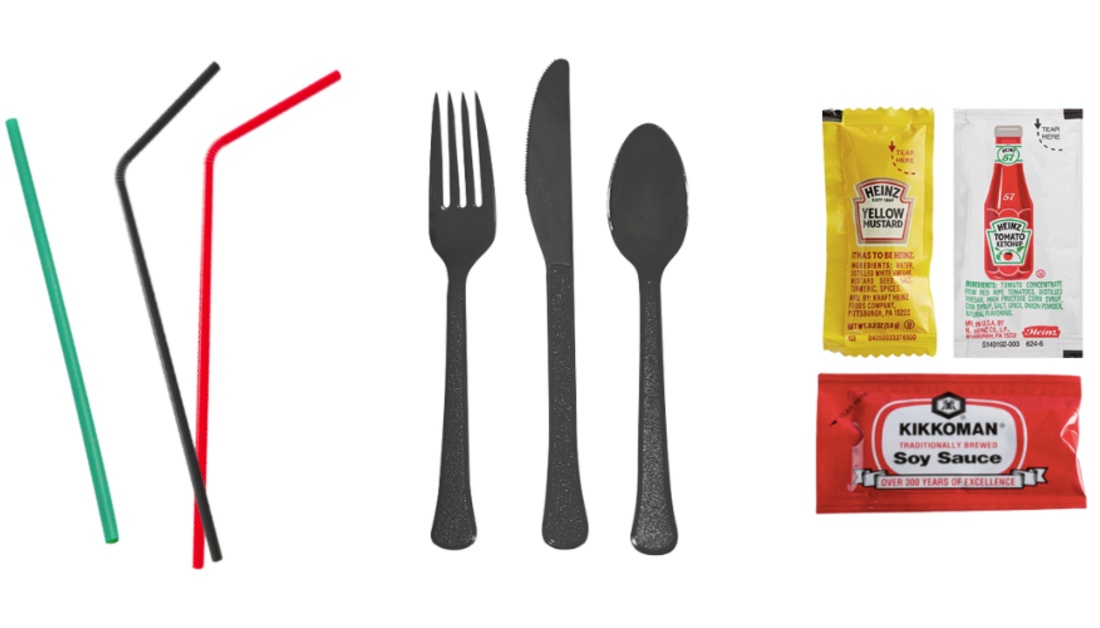
AB 1276 expands California’s existing “straws upon request” policy (from AB 1884) to a broader range of single-use foodware accessories and condiments. It aims to reduce waste, curb contamination of recycling and composting systems, lower disposal costs, and diminish plastic pollution—particularly benefiting marginalized communities by addressing health and environmental justice concerns.
THE ISSUE
Every year in the United States, an estimated 561 billion disposable foodware items are used, resulting in a whopping 4.9 million tons of waste.1 Unused food accessories including utensils, straws, napkins, condiment packages, and otherwise clog landfills, complicate recycling, and pollute streets and waterways in our communities.
Restaurants in the U.S. spend $19 billion purchasing disposable foodware items. California restaurants that have voluntarily made the transition to a combination of by request and reusable foodware have been proven to save between $3,000 and $21,000 per year, while reducing waste and greenhouse gas emissions. Additionally, reuse creates as many as 30 times more jobs than landfills.
California’s local governments and taxpayers spend over $428 million annually in ongoing efforts to clean up and prevent litter in streets, storm drains, parks and waterways.
Recyclers are now faced with a worsened crisis, as the vast majority of these non-recyclable single-use food accessories debase recycling systems and can contaminate many commercial compost facilities. This increases costs to collection, sorting, processing and disposal for cities and ratepayers.
Position: Supported by Californians Against Waste
Contact: Tony Hackett
BILL SUMMARY:
What’s Covered (Definitions)
Accessories: forks, knives, spoons, sporks, chopsticks, condiment cups/packets, straws, stirrers, splash sticks, cocktail sticks
Condiments: ketchup, mustard, mayo, soy sauce, hot sauce, salsa, sugar, salt/pepper, etc.
Main Requirements
Must be provided only if requested
No bundling or forced packaging
Drive-throughs/airports may ask proactively if needed for safe consumption
Delivery platforms must enable item selection and pass only requested items
Allows self-serve dispensers; bulk condiment dispensers encouraged
Local governments can adopt stricter rules
Enforcement
Local enforcement by June 1, 2022
1st/2nd violations: warning
Further violations: $25/day, up to $300/year
AB 1724 (Stone) Microfiber Filtration
OVERVIEW
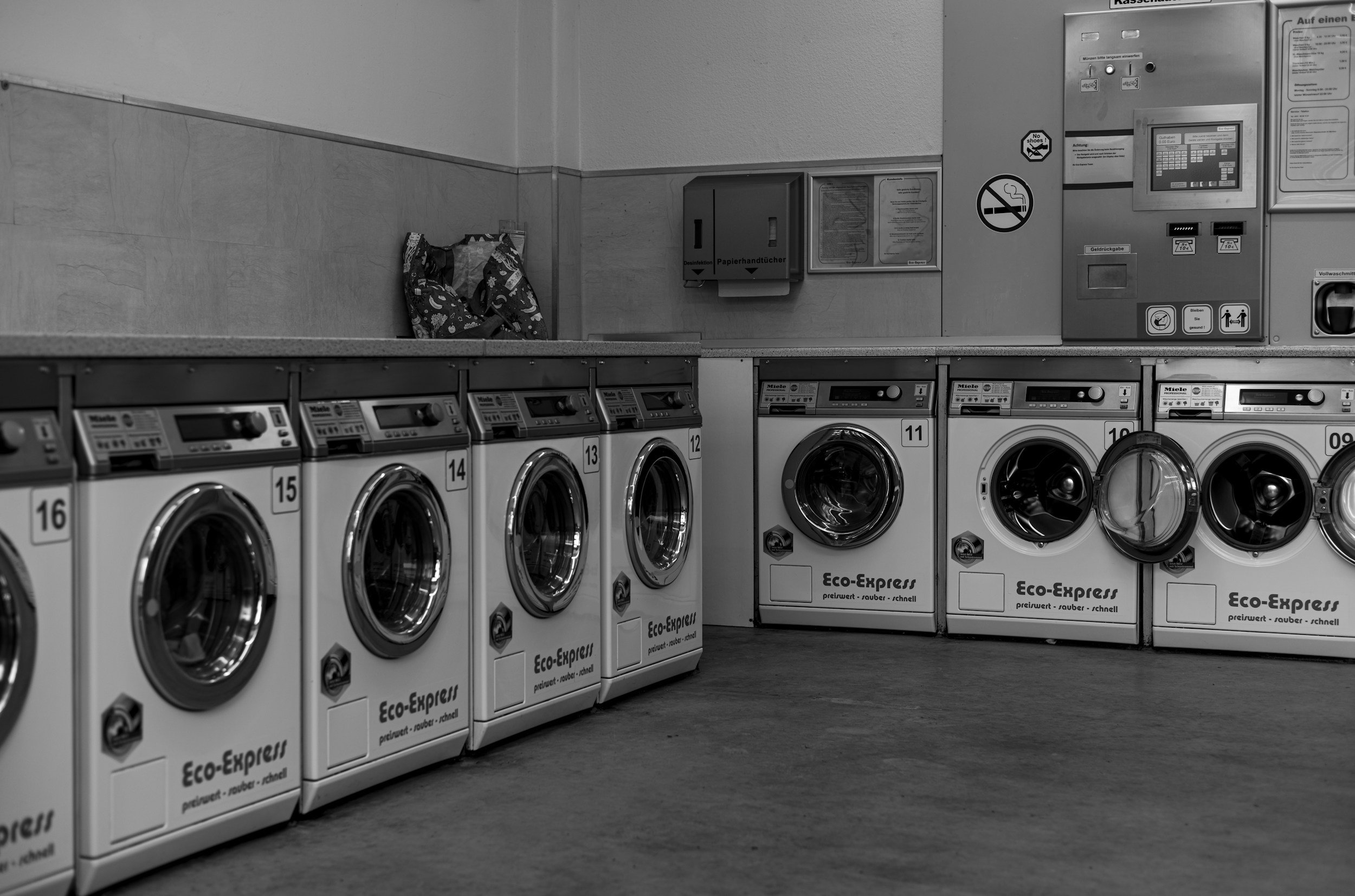
AB 1724 will require all new washing machines sold in California to be equipped with microfiber filtration by 2024. The bill will also require the state to retrofit all state-owned washing machines with a microfiber filter.
THE ISSUE
Plastics can persist for hundreds or thousands of years because their molecular structure is inherently stable and resistant to biodegradation. Thus, more and more plastic ends up in our ecosystems. Microfibers are particles that comes from synthetic fabric. These microfibers end up in freshwater systems or in the ocean and are often found in tap water, bottled water, fish, table salt and beer.
A 2018 report on microplastics in drinking water found that 81% of the 159 tap water samples from around the world contained microplastics, mostly in the form of microfibers. Additionally, a recent study found that an average 11 pound wash load of polyester fabrics releases more than 6 million microfibers.
A microfiber filter can reduce the amount of microfibers released in a load of laundry by 87%. By requiring washing machines to be equipped with a microfiber filter, California can easily and effectively reduce the amount of microplastics that end up in our oceans and freshwater systems. The filters will also dramatically reduce the amount of microplastics that enter our water system through wastewater treatment facilities.
Position: Supported by Californians Against Waste
Contact: Tony Hackett
BILL SUMMARY
To help reduce the amount of microfibers released in the ocean and freshwater systems, AB 1724 will address the problem at the source. The bill will require new washing machines sold after January 1, 2024 to have a microfiber filter and will require the state to retrofit all state-owned washing machines with a microfiber filter.
Status: Held
Current language, analysis, and votes: AB 1724
AB 1894 (L. Rivas & Petrie-Norris) Smoking Waste Pollution Prevention Act
OVERVIEW
AB 1894 will transition the sale of single-use cigarette and cigar, and all-in-one disposable vapes to rechargeable and reusable smoking products.
THE ISSUE
Cigarette and cigar filters (filters), as well as more recent all-in-one disposable vaping devices (vapes), are smoking products that have caused a public and environmental health crisis. Disposal of vapes after one use is wasteful and places the cost of cleanup onto state and local governments, while still leaving behind microplastics and toxins from their filters, electronics, and batteries.
Improperly disposed cigarette filters and all-in-one disposable vapes are known to leach toxic chemicals into the environment, pollute water, and harm wildlife. In 2017, the United Nations World Health Organization issued a report that describes the chemicals in discarded cigarette filters as acutely toxic to aquatic organisms.
Local and state agencies deal with sizable costs due to discarded cigarette filters and all-in-one disposable vapes, with annual estimates in the tens of millions for large municipalities. In 2009, San Francisco spent nearly $10 million on cigarette filter cleanup, and public agencies are spending more than $41 million annually on sanitation services for cigarette filters alone. Stormwater agencies pay for violations and costs to implement effective capture systems and protect water quality. Additionally, schools must collect discarded vapes as hazardous waste, which is a costly burden to under-resourced schools.
Position: Supported by Californians Against Waste
Contact: Tony Hackett
BILL SUMMARY
AB 1894 will transition the sale of cigarette/cigar filters and all-in-one disposable vapes, which are not rechargeable, to unfiltered cigarettes and reusable and rechargeable smoking products to address the ubiquitous impacts that these single-use products have on our health and environment. These products harm public health and produce litter that has lingering adverse effects on our ecosystems. Cigarette and vape litter also pass unnecessary cleanup costs onto our state and local governments. Under the provisions of the bill, violations of the sales ban can result in civil penalties of $500 per violation and are only enforced by local prosecutorial authorities.
Status: Signed by the Governor
Current language, analysis, and votes: AB 1894
AB 2026 (Friedman)
OVERVIEW
AB 2026 will reduce single-use plastic packaging used in the e-commerce marketplace by phasing out certain single-use plastic packaging that is often added to goods for shipment of e-commerce purchases.
THE ISSUE
A large majority of shipping envelopes and packaging materials such as air pillows, bubble wrap, and packing peanuts are made of plastic. The vast majority of this plastic becomes waste after a package is opened and then pollutes the environment whether it is sent to landfills, burned or becomes litter.
Most municipal recycling programs in California do not accept shipping envelopes, plastic air pillows, bubble wrap or expanded polystyrene (including packing peanuts and molded foam). This plastic waste increases disposal costs for local communities, their residents and businesses, and has been found to harm marine life. In 2020, the U.S. generated 601.3 million pounds of plastic packaging waste from e-commerce.
Assemblymember Friedman
Position: Supported by Californians Against Waste
Contact: Tony Hackett
BILL SUMMARY
If successful, AB 2026 would phase out the use of plastic films, cushioning and other plastic packaging materials in California. This would include materials used for shipping in or into the state. This mandate would require large retailers to meet this mandate by January 1, 2024 and small online retailers to do the same by January 1, 2026.
Status: Dead. Held by Senate Appropriations Committee.
Current language, analysis, and votes: AB 2026
AB 2208 (Kalra)
OVERVIEW
AB 2208 would phase out fluorescent lamps in general lighting applications by banning the sale of compact fluorescent lamps starting on January 1st, 2024, and the sale of linear fluorescent lamps starting on January 1st , 2025.
THE ISSUE
Even though California is one of seven states that have either banned mercury-added lamps from being disposed in the regular trash or enacted Extended Producer Responsibility laws, low lamp recycling rates and accidental breakage still cause significant mercury release. Therefore, each fluorescent lamp must be viewed as a potentially serious health risk to consumers, their families, and the solid waste management workers who encounter them in the trash. By ushering out fluorescent lamps, this bill will allow better alternatives to light the way to a safer, more energy-efficient future.
Assemblymember Kalra
Position: Supported by Californians Against Waste
Contact: Tony Hackett
BILL SUMMARY
AB 2208 would prohibit the sale and distribution as a new manufactured product of compact fluorescent lamps and linear fluorescent lamps with the exception of specialty fluorescent lamps, including those used in image capture, image projection, and disinfection starting on January 1st, 2024, and January 1st, 2025, respectively.
Status: Signed by the Governor
Current language, analysis, and votes: AB 2208
AB 2779 (Irwin)
OVERVIEW
AB 2779 would expand the state’s Beverage Container Recycling Program (Bottle Bill) to include wine and distilled spirits sold in aluminum beverage containers.
THE PROBLEM
Spirits and wine packaged in aluminum cans have been sold for several years, but the sale of these products has drastically increased over the past 3 years. California’s Bottle Bill does not include canned wine or distilled spirits. By excluding these beverages, California is missing an opportunity to reclaim a growing segment of disposable aluminum cans entering the waste system.
This exclusion also creates consumer confusion when determining what products are recyclable under the program, especially as the packaging of these products are nearly identical to other CRV eligible beverages. Adding distilled spirits and wine beverages packaged in single-serve aluminum cans to the Bottle Bill is a logical step to ease consumer confusion. This will also ensure California is tracking the recycling rates of all aluminum beverage cans entering the marketplace.
Assemblymember Irwin
Position: Supported by Californians Against Waste
Contact: Mark Murray
BILL SUMMARY
AB 2779 would add wine sold in aluminum beverage containers and distilled spirits sold in aluminum beverage containers to the list of eligible beverage products for California’s CRV program. This expansion is a significant step to incentivize the recycling of all aluminum beverage cans and ensure California is accurately tracking the recycling rates of these products within the state.
Status: Held
Current language, analysis, and votes: AB 2779
AB 2784 (Ting)
OVERVIEW
AB 2784 helps create a circular economy to produce, collect, recycle and reprocess postconsumer plastic thermoformed containers.
THE PROBLEM
For the past two decades, thermoform clamshells have contained the most California recycled content of any food packaging in the United States. But the recycled content consisted primarily of recycled plastic beverage containers.
As the beverage industry moves to increase their own recycled content to comply with AB 793 (Ting & Irwin), the thermoform industry needs to transition to recycling their own thermoform containers. California exports far more PET thermoform packaging out of state than what is sold and ultimately disposed of within the state. As a result, recycled content mandates must start at a lower rate than beverage bottles in AB 793 due to the large volume that is packed in the state and exported in the form of packaged goods.
There are approximately 200 million pounds of thermoform waste discarded every year in California and growing. The state currently has a low collection rate for the material. In order to encourage efficient use of recyclable plastics, this bill sets a minimum recycled content standard.
Assemblymember Ting
Position: Supported by Californians Against Waste
Contact: Mark Murray
BILL SUMMARY
AB 2784 would establish a timeframe for minimum recycled content for plastic thermoform manufacturers as follows:
January 1, 2025 – 10% minimum content
January 1, 2028 – 20% minimum content
July 1, 2030 – 30% minimum content
Additionally, the bill will:
Establish reporting requirements;
Provide CalRecycle with enforcement and auditing authority;
Establishes a 20 cent penalty and $4 penalty for expanded polystyrene; and
Establish an antitrust provision.
Status: Vetoed by the Governor
Current language, analysis, and votes: SB 2784
SB 38 (Wieckowski)
OVERVIEW
This bill would exempt beverage manufacturers that sell fewer than 2 million beverage containers in a calendar year from the Bottle Bill recycled content requirements minimum. The bill also requires CalRecycle to take specified actions to reduce contamination in recycled glass and prohibits cash payments from processors to certified recycling centers, curbside programs, and drop-off or collection programs.
THE ISSUE
Maximizing the use of recycled content in beverage containers supports recycling markets within the state, helping to reduce California’s reliance on exporting recyclable material. Minimum content standards, can reduce energy consumption and air pollution, including a reduction in GHG emissions. When the state adopted minimum content requirements, there was a de minimis provision included in the law that allowed beverage manufacturers to be exempt from it if they pay $15,000 or less in processing fees annually. With high scrap prices in 2022 there will likely be a zeroing out of processing payments as of January 1, 2023. At that point, most beverage manufacturers using plastic containers would have their total processing fees reduced to below $15,000 per year - exempting them from all of the requirements of our minimum content standard statute. If the de minimus provision is not corrected, demand for minimum content will likely fall as well as per ton scrap value. The PET processing payments would eventually revert to higher values and cost the fund tens of millions of dollars per year. Unlike other programs, the California Bottle Bill programs deals with issues of fraud not seen anywhere else, specifically with the use of cash payments between processors and recyclers. Which is unheard of in other programs. The law currently does not mention the way payments should be made. Modernizing the program provides CalRecycle better oversight and enforcement capabilities.
Contamination of materials is an ongoing issue in California’s program, particularly for glass containers. When handled through curbside programs they break into small pieces as part of the process of collection, compaction and sorting. And current statute has no provisions to require recovery facilities to produce glass that is free of contaminants, and CalRecycle has little authority to implement or develop processes to reduce, or better yet, eliminate contamination.
Position: Supported by Californians Against Waste
Contact: Mark Murray
BILL SUMMARY
SB 38 would exempt beverage manufacturers that that sell fewer than 2 million beverage containers in a calendar year from the minimum content standards. This does not expand or exclude manufacturers but ensure that large manufacturers are not exempted from the law due to an issue with how the language in code is drafted. Additionally, the bill requires processors to make payments by check or electronic fund transfer, not by cash payment and directs CalRecycle to study and develop a system to address contamination to improve the quality of glass material collected.
Status: Signed by the Governor
Current language, analysis, and votes: SB 38
SB 240 (Eggman) Food Donation Tax Credit
OVERVIEW
SB 240 would extend the sunset of the Healthy Food Donation Bank tax credit to January 1, 2027.
THE ISSUE
One in four Californians currently faces food insecurity. According to the most recent Census Household Pulse Survey, 1 in 4 California households is food insecure, with even higher rates among Latinx and Black households with children. Nearly 1 million Californians, both urban and rural, live in food deserts and spend an inordinate amount of time and money simply trying to find healthful food for their families. It is often food banks that provide relief for these families.
Position: Supported by Californians Against Waste
Contact: Nick Lapis
Status: Dead. Not taken up for a vote on the Senate Floor.
Current language, analysis, and votes: SB 240
SB 983 (Eggman)
OVERVIEW
Providing independent repair shops with the correct information and parts to make repairs efficiently will stimulate jobs within the communities where repairs are needed, reduce the need to replace products with simple fixes, and save money for consumers.
THE ISSUE
For 30+ years, California has required manufacturers provide access to replacement parts and service materials for electronics and appliances to the manufacturer’s authorized repairers in the state.
In July of 2021, President Biden issued an Executive Order broadly aimed at promoting fairness and competition in the marketplace, and specifically directing the Federal Trade Commission (FTC) to address, among other issues: “unfair anticompetitive restrictions on third-party repair or self-repair of items, such as the restrictions imposed by powerful manufacturers that prevent farmers from repairing their own equipment.”
This order follows a landmark report from the FTC released in May of 2021. “Nixing the Fix” was the product of a workshop that began in July of 2019, bringing together consumer advocates, manufacturers, repair professionals, and more, to comprehensively examine the types of practices President Biden would later target in his order. Restrictions on repair stem all the way from product design and part availability to software locks and licensing agreements, but the report found that “there is scant evidence to support manufacturers’ justifications for repair restrictions." While the President's order calls on the FTC to use its authority to address repair restrictions, the FTC acknowledges in their report that more action is needed, and that they will work with state legislators to ensure consumer choice.
When the manufacturers are the only entities that hold the correct information and parts to make repairs, they’re able to set repair prices that ultimately result in an unnecessary and wasteful high turnover of electronics. Without a fair and competitive repair marketplace, we will continue to see vast amounts of electronic waste generated in the state and money taken out of the pockets of everyday people, with potentially the greatest harm to low-income areas and communities of color.
Position: Sponsored by Californians Against Waste
Contact: Nick Lapis
BILL SUMMARY
This bill will extend requirements to provide the same parts and service materials, under fair and reasonable terms, to independent service dealers regulated by the Department of Consumer Affairs and to individual owners. This will create a more competitive repair marketplace ensuring that consumers aren’t forced to pay a manufacturer’s designated, high cost repair service, or be forced to invest in a new item altogether due to their inability to affordably repair broken electronics and appliances. SB 983 adds individual owners and regulated independent service dealers to the entities eligible to receive functional parts, tools, and service literature from manufacturers for electronics and appliances.
Status: Held
Current language, analysis, and votes: SB 983
SB 1013 (Atkins)
OVERVIEW
SB 1013 will measurably increase glass and PET container recycling, improve the financial viability of recycling centers, and reduce consumer confusion by extending the scope of California’s Bottle Bill to include all wine and distilled spirit containers.
THE PROBLEM
Current law includes MOST beer, soft drink, water, flavored juices, and other drink containers but it presently does not include wine bottle or distilled spirits containers. There are tens of thousands of such containers that end up littering our parks and highways, filling our landfills, and creating an environmental nuisance on our beaches. For decades, the wine and distilled spirits industries opposed being added to the Ca Bottle Bill Program, which has created anomalies in the recycling system with some containers in the program and some out of the program. It has further distorted recycling economics as often the same or similar containers may or may not be in the program depending upon what liquid is inside them.
Senator Atkins
Position: Supported by Californians Against Waste
Contact: Mark Murray
BILL SUMMARY
Long overdue, SB 1013 expands the state Bottle Bill program to include wine bottles and distilled spirits containers, a historical step towards extending the scope of the program since this addition has the potential to divert more than 200,000 tons of additional glass and PET from disposal.
Status: Signed by the Governor
Current language, analysis, and votes: SB 1013
SB 1256 (Wieckowski) Reusable Propane Cylinders
OVERVIEW
Single-use 1lb propane cylinders (also known as propane tanks) typically used in camping stoves, lanterns, welding equipment and are a consumer product that has been a longtime concern. SB 1256 would ban single-use 1-pound propane cylinders to transition California to reusable canisters that are better for consumers and the environment.
THE ISSUE
It is estimated that between 40-60 million single-use 1lb propane cylinders are sold in the United States every year. These small 1lb propane cylinders are the only propane cylinders that are sold as single-use. All other propane cylinders 5 gallons (20lb) or larger have always been refillable and designed and marketed for refilling.
Local, state, and national parks have long struggled with the impacts of improperly disposed single-use 1lb propane cylinders. A 2019 article from Waste 360 reported that the Yosemite National Park collects between 20,000 and 25,000 tanks a year and trucks them more than two hours away to a facility that processes low-grade hazardous waste. One of Yosemite’s sustainability initiatives is focused on reducing improper disposal of propane tanks by promoting use of refillable tanks.
Safety is an additional issue that makes disposable propane problematic. In most situations it is impossible to know whether a cylinder is completely empty. If a cylinder ends up at a Material Recovery Facility with complex machinery used to separate materials, there is a risk of explosion that could cause injury to personnel or damage to infrastructure. This is part of what contributes to the cost of collecting and recycling these cylinders. In order to be safely recycled, they must be evacuated and then punctured using special equipment to ensure that they are safely processed.
Position: Supported by Californians Against Waste
Contact: Tony Hackett
BILL SUMMARY
This bill would prohibit the sale of disposable propane cylinders, as defined, and would make the violation of this provision subject to specified civil penalties. The bill would authorize a city attorney or county counsel to impose these civil penalties, as provided. SB 1256 would take effect in January 2028 to give the industry ample time to move to refillable 1-pound cylinders.
Status: Vetoed by the Governor
Current language, analysis, and votes: SB 1256